
Course Content
-
By the end of this module, participants will be able to:
Identify the key signs and symptoms involved in the diagnosis of Parkinson’s disease (PD)
Recognize “red flags” that suggest an alternative diagnosis or complex presentation, and understand when referral to a movement disorders specialist is warranted
Review and apply principles of initial pharmacologic management for PD, including common medications and their indications
Develop proficiency in evidence-based lifestyle strategies—including diet and exercise—that support symptom management and overall well-being
Gain a foundational understanding of motor complications in PD (e.g., wearing-off, dyskinesias) and become familiar with adjunctive treatment options
-
A careful physical examination remains a cornerstone in the diagnosis and management of parkinsonism. This module provides practical guidance on how to perform a focused exam that captures both motor and non-motor features, helps distinguish atypical presentations, and identifies key risk factors for falls—an essential step in guiding treatment decisions and improving patient safety.
By the end of this module, participants will be able to:
Perform a focused physical examination relevant to parkinsonism and Parkinson’s disease, including assessment for atypical features and non-motor symptoms
Recognize key risk factors for falls during the physical exam, and understand how to incorporate these findings into clinical decision-making
-
This module offers a deeper dive into the exclusion criteria for idiopathic Parkinson’s disease (PD) and explores the clinical features that suggest atypical parkinsonism. It also covers an approach to distinguishing between different atypical parkinsonian syndromes and reviews other important differential diagnoses, including drug-induced and vascular parkinsonism.
By the end of this module, participants will be able to:
Recognize clinical red flags and exclusion criteria that argue against a diagnosis of idiopathic PD
Differentiate between major atypical parkinsonian syndromes (e.g., PSP, MSA, CBD, DLB) using key clinical features
Consider and evaluate alternative diagnoses such as drug-induced parkinsonism and vascular parkinsonism in the differential
-
Non-motor symptoms of Parkinson’s disease are often underrecognized, yet they play a major role in declining function, reduced quality of life, caregiver stress, and hospitalization. This module highlights the importance of identifying and managing these symptoms early and effectively. With a focus on practical strategies and high-impact clinical targets—the “low-hanging fruit”—participants will gain tools to improve day-to-day care for people living with Parkinson’s disease.
By the end of this module, participants will be able to:
Recognize the significance and impact of non-motor symptoms in Parkinson’s disease on patient quality of life and functional outcomes
Develop a systematic approach to screening for and diagnosing common non-motor symptoms in clinical practice
Effectively manage high-yield, commonly overlooked non-motor symptoms—also known as the “low-hanging fruit”—including:
The 3 D’s:
Dementia and psychosis
Disturbed sleep, including REM sleep behavior disorder
Depression and anxiety
The 3 B’s:
Blood pressure issues, including orthostatic hypotension and supine hypertension
Bowel and bladder symptoms, such as constipation and urinary dysfunction
Bone health and falls prevention
-
As Parkinson’s disease and related syndromes progress, care becomes more complex and nuanced. This module focuses on the later stages of parkinsonism, where clinical decision-making must balance symptom management, patient goals, and quality of life. Participants will explore the features of advanced disease, approaches to sensitive conversations about goals of care, and the growing role of Neuropalliative Care in supporting patients and care partners through this phase. Practical strategies for applying palliative principles in everyday clinical settings will also be covered.
By the end of this module, participants will be able to:
Recognize the clinical features of advanced parkinsonism, including both atypical parkinsonian syndromes and advanced Parkinson’s disease
Apply a structured approach to discussing goals of care with patients and care partners in the context of advanced parkinsonism
Understand how to balance physical and mental symptom management in later stages of the disease
Review the evidence supporting the role of Neuropalliative Care in Parkinson’s disease and related conditions
Learn foundational strategies for integrating Neuropalliative Care into everyday clinical practice
-
Deciding when and how to initiate treatment for parkinsonism is not always straightforward—especially in older adults with frailty, multimorbidity, or cognitive impairment. This module explores the nuances of prescribing levodopa, with a focus on real-world clinical scenarios encountered in long-term care and geriatrics. Through discussion of risks, benefits, and goals of care, participants will develop a more individualized, person-centred approach to initiating and adjusting therapy for complex patients.
By the end of this module, participants will be able to:
Evaluate when it is appropriate to initiate levodopa in patients with signs of parkinsonism
Assess the potential benefits and risks of levodopa in frail older adults residing in long-term care settings
Determine the likelihood of therapeutic benefit from levodopa in patients with advanced frailty or limited life expectancy
Formulate treatment approaches for patients with parkinsonism who also have dementia and behavioural symptoms
-
This module provides the opportunity for participants to apply their new knowledge in realistic cases in various care settings. Working in small groups, participants could explore the various strategies for management of common Parkinson's disease symptoms and complications, aiming to deliver evidence-based, comprehensive care in a person and family-centered model.
By the end of this module, participants will be able to:
Anticipate, recognize and manage common issues in patients with Parkinson's disease in acute hospital settings
Manage common non-motor symptoms (aka "low-hanging fruit") in patients with Parkinson's disease
Recognize common motor complications and recommend treatment options
Recognize atypical red-flag symptoms and suspect atypical parkinsonism
Balance the priorities of motor vs. non-motor symptoms in late-stage Parkinson disease
-
As a tool for learning, we have designed a Pre-Course Assessment and 2 Post-Course Assessments (to be completed shortly after course completion and 3 months after) to help participants identify their learning needs. These assessments contain the most important concepts from the course. The data from these assessments will be used by our team to evaluate course effectiveness and for further improvements.
Participants are also invited to share on the website a case or reflection of how they have applied their new knowledge in their practice. This is an evidence-based learning tool to help consolidate knowledge and skills.
The reflections will be shared on an open forum for all participants who have taken the course, and the course instructors will provide feedback to facilitate continued learning for all interested.
Good Practice Points Handout
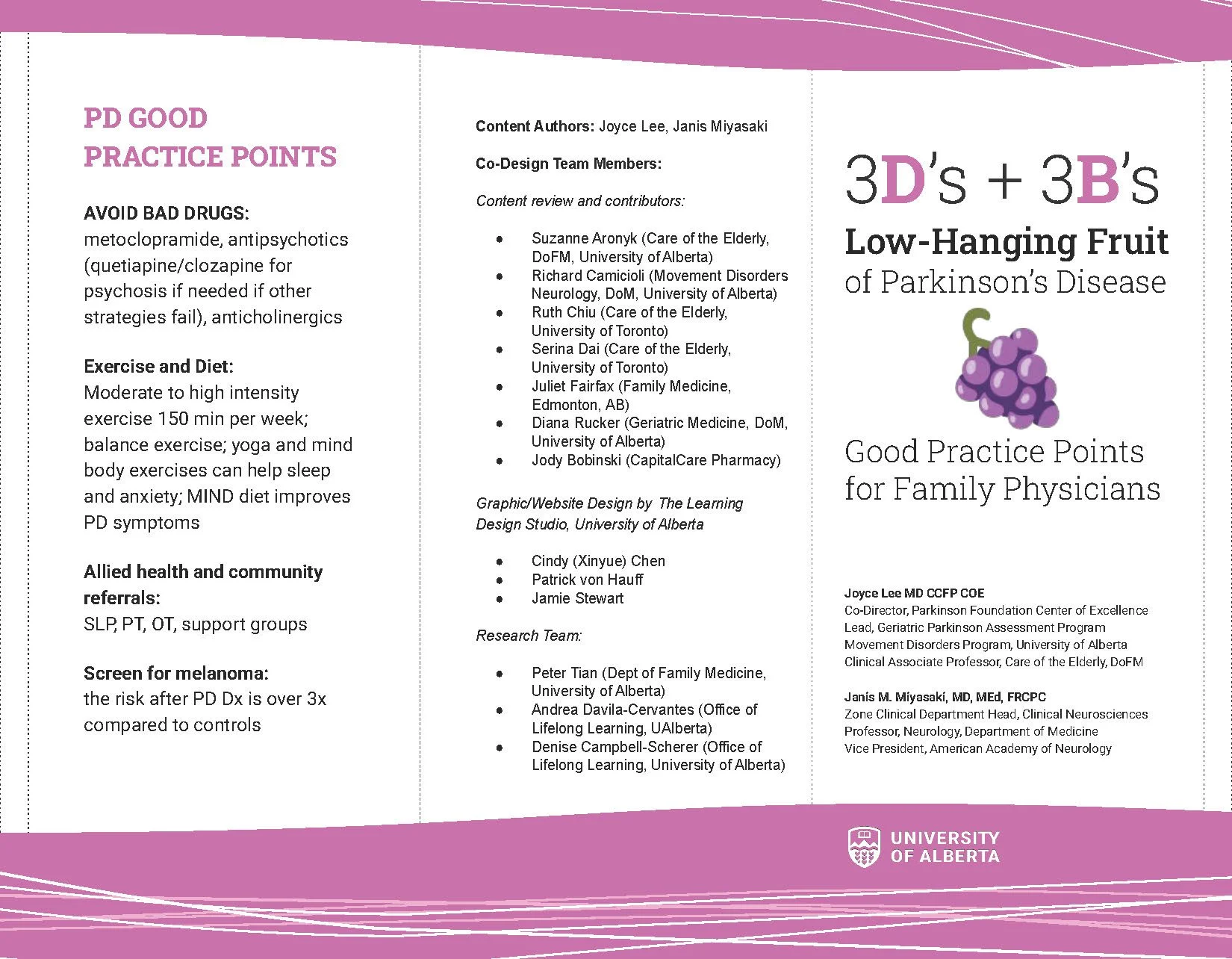
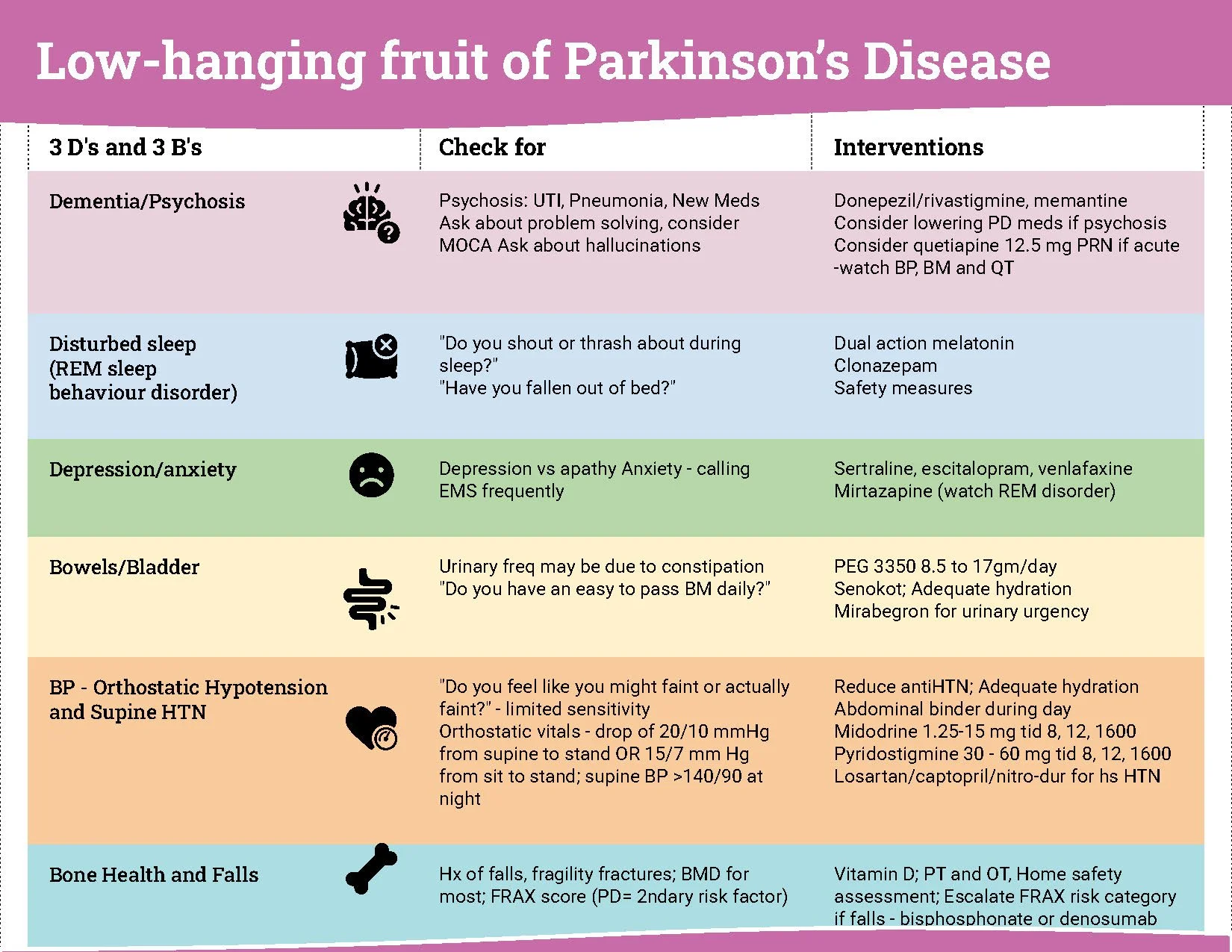
Standard version (flip on short edge)
Use this version if you know how to set your printer to flip on the short edge for double-sided printing.
Alternate version (second page flipped)
Use this version if you’re not sure how to adjust your printer settings — it’s already set up so the second page comes out the right way.